
The Podium Institute’s Multimodal Concussion study, conducted in partnership with Gloucester Rugby and Cobalt Health, has been featured this week on both TNT Sports and the BBC.
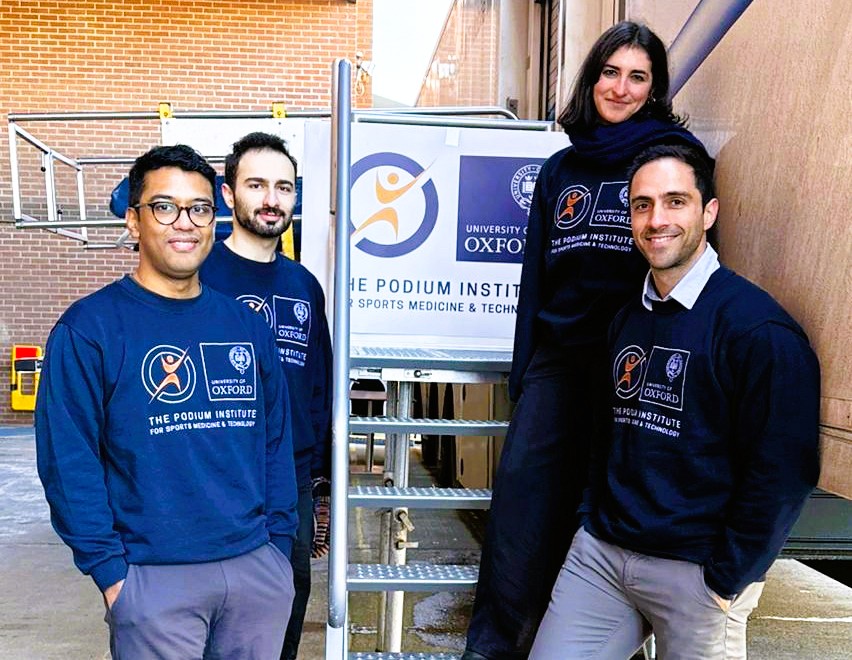
Led by Professor Constantin Coussios, the study is the world’s first fully independent multimodal investigation into concussion in rugby, using a mobile MRI scanner alongside a suite of advanced technologies to deliver a more accurate diagnosis. Members of the research team including Podium doctoral students Tobias Harritz, Dr Sheikh Momin, Amelia Thornton, Konstantin Dzavaryan, and postdoctoral researcher Dr Andreas Christou, took part in the media interviews to explain the scientific approach and the importance of the work.
BBC Coverage
The BBC documentary Ben Youngs Investigates: How Safe Is Rugby? is available on BBC iPlayer, and it will air on BBC One at 22:40pm on Tuesday 3rd March 2026. The programme offers an in-depth exploration of the latest science surrounding head impacts and the long-term effects on players’ health.
Former England scrum half Ben Youngs investigates how the sport is evolving in response to concerns about brain injury. He meets players living with neurological conditions, as well as clinicians, scientists and governing bodies working to improve player welfare. During his conversation with Professor Coussios, Youngs finds out what the main aims of the study are and concludes that The Podium Institute’s contribution to this area of research is not only fascinating but has the potential to transform how rugby approaches brain health and player safety in the future.
“One of the key aims of the study is to be able to develop metrics that will transcend the professional sport and will be ubiquitous and applicable to sport at all levels, including community and youth.” Professor Constantin Coussios, OBE FREng FMedSci
TNT sports – Concussion in rugby – Alastair Eykyn explores the NEW techniques helping us to understand more
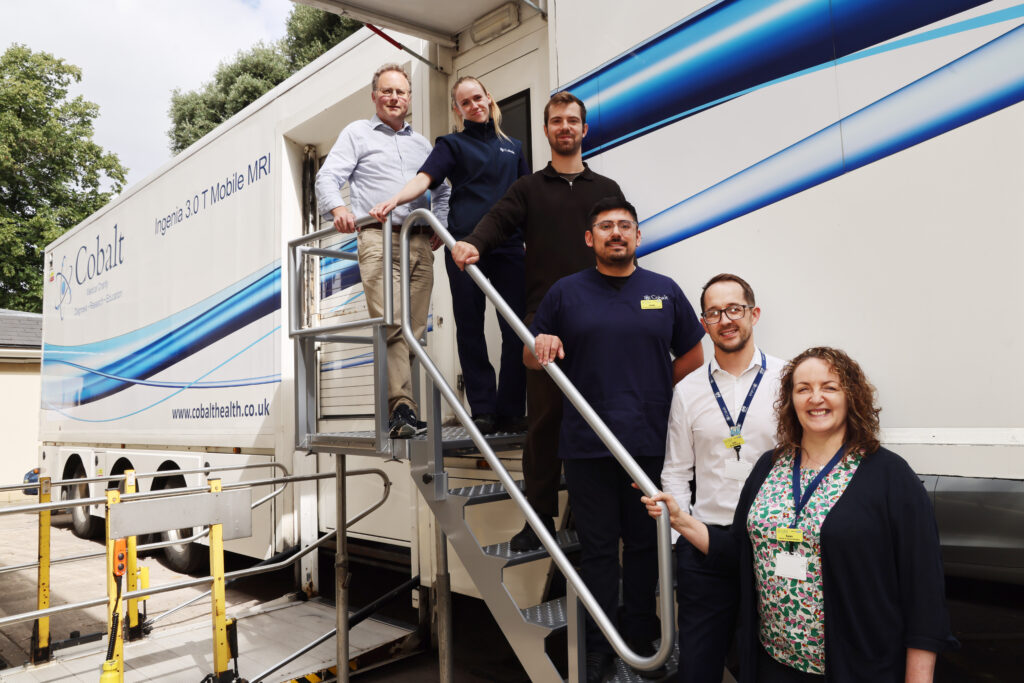
TNT Sports is also highlighting the Podium Multimodal Concussion study in a feature presented by Alastair Eykyn, focusing on emerging technologies that are transforming how concussion is assessed. The segment provides behind the scenes insight into the Podium Institute study, which is the first to scan players within hours of a suspected concussion using a mobile MRI unit. Previously, accessing scanning facilities quickly enough to capture this early window was not feasible.
Podium Doctoral student Tobias Harritz explains that this immediate imaging period may be crucial. On match days, if a player is suspected of having a concussion, they undergo the HIA1 and HIA2[1] assessments before being taken to the mobile MRI scanner for approximately 45 minutes. This allows clinicians to gain “a more objective measure of the extent to which the player has been concussed.”
The study also stands out for examining concussion equally in both the men’s and women’s squads at Gloucester Rugby, also exploring how concussions may affect women differently, an area where scientific data remains limited.
A multimodal approach to diagnosis
To build a comprehensive diagnostic picture, alongside MRI imaging, the project incorporates several complementary methods. Blood and saliva samples are taken from players to identify proteins that may be released by the brain following a concussion. Baseline measurements collected at the start of the season allow researchers to compare results throughout the year, with the long-term aim of developing scalable diagnostic tools suitable for grassroots sport, which in the future players might even be able to do themselves.
 Electroencephalography (EEG) is used to identify differences in brainwave activity between concussed and non‑concussed players, allowing researchers to combine these signals with other clinical and performance data to assess how accurately concussion can be detected.
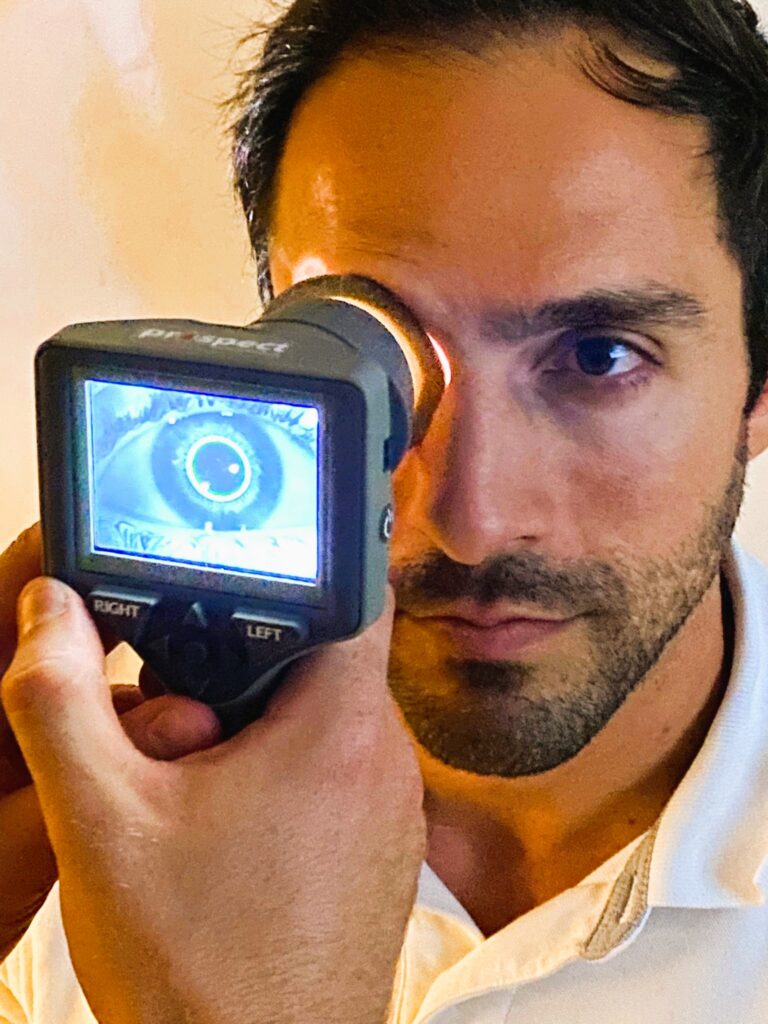
Amelia Thornton explains how Eye Tracking is a good marker of brain function. Carried out with a handheld pupillometer, the device assesses how brain function influences pupil response. This technique provides rapid results in under two minutes, making it a promising tool for sideline decision making. Amelia mentioned: “Of all the markers the eyes can be assessed so fast. Pupillometry can be done in 2 minutes and for different sport environments where fast decisions need to be made, it can be very useful.”
In addition, instrumented mouthguards capture detailed data on head acceleration during collisions. Because the sensors are fixed to the teeth and therefore to the skull, they provide a highly accurate measure of head movement before, during and after impacts.
The combination of the different data streams obtained by these tests give us a lot of information to accurately predict if someone has been concussed. Dr Andreas Christou, says: “It is also done in a very personalised way. All the athletes are scanned before the game, before the season starts, so we know what is normal for that specific individual and then when they get injured we have something to compare it against”.
Main aims of the study
In the interview Professor Coussios explains that the study has three central aims. The first is to develop more objective methods for diagnosing both the presence and severity of concussion. The second is to build the evidence base and technologies needed to improve return to play, ensuring players only resume sport when it is safe to do so. The third is to deepen our understanding of the mechanisms behind concussion, paving the way for better protective equipment and preventative strategies.
This collaboration between researchers and athletes shows what is possible when science and sport work together with a shared commitment to player welfare, laying the groundwork for safer practices across all contact sports.
© Thousand Word Media Ltd 2025. No unauthorised sales or syndication.
[1] HIA Protocol | World Rugby