
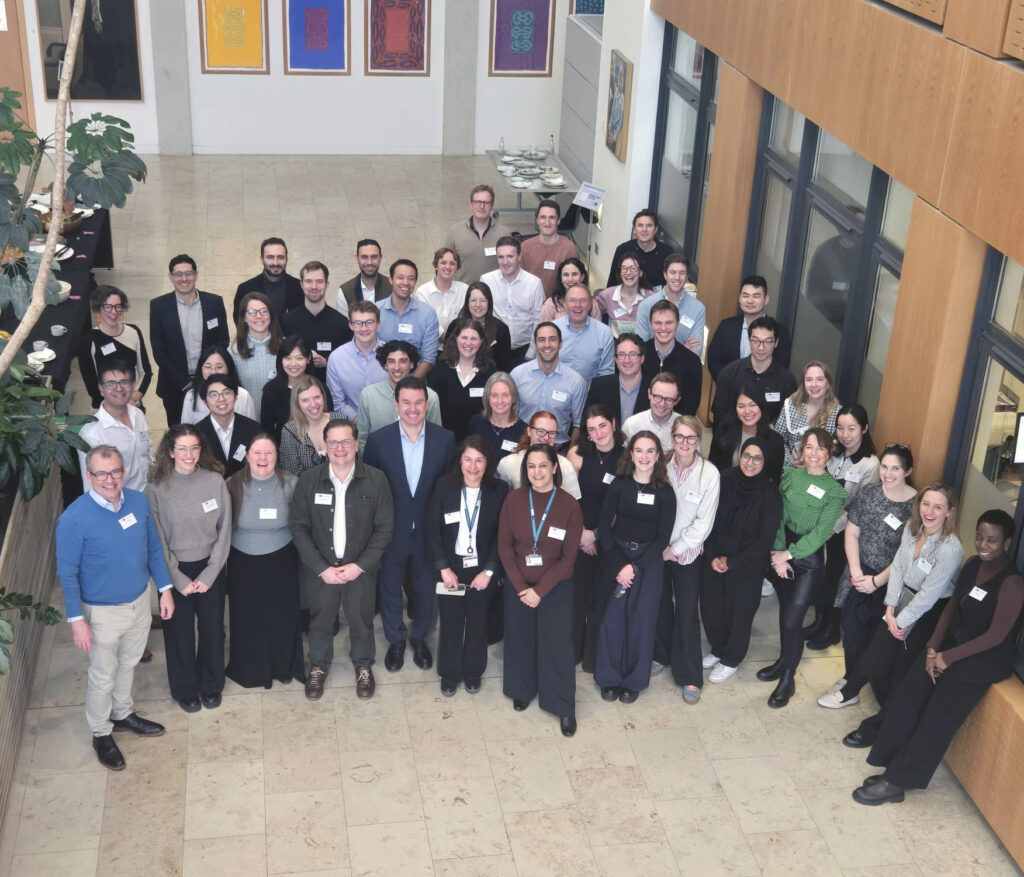
For the third-year running, teams from The Podium Institute for Sports Medicine and Technology and Podium Analytics came together in Oxford at the Richard Doll Building for a full‑day Roundtable focused on reflection, collaboration, and innovation. The event offered both groups a valuable opportunity to step back from our busy schedules and reconnect around their shared mission: enabling more sport with fewer injuries.
From the start, the atmosphere was warm, open, and highly engaged, with a strong sense of camaraderie and curiosity. Participants welcomed the chance to learn about each other’s work, explore emerging research, and discuss how to turn new insights into real‑world impact across sport. The programme blended research presentations, lived experiences, and discussions on practical application, offering a clear and comprehensive picture of the progress being made across all research areas.
The talks begun with a Musculoskeletal Health session introduced by Podium doctoral student Lucy Buchanan. Track and field athlete and Sports and Exercise Medicine Registrar Dr Montana Jackson shared a powerful personal account of injury, grounding the discussions in real athlete experience. Professor Dylan Morrissey outlined Podium Analytics’ mission to reduce the impact of sports injuries through science led, data driven work, especially in youth and grassroots sport. Professor Liang He then presented his team’s projects, including a head-neck collision model, a non‑invasive hip‑movement screening method, and smart tools to study grip control in tennis.
The Cardiovascular Health session, led by Dr Nivedita Bijlani and Erik Vanegas Muller, featured invited guest Dr Zafar Iqbal who spoke about his role as Head of Sports Medicine at Arsenal FC and his advocacy work for wider public access to defibrillators and nationwide CPR Training with charities such as the Oliver King Foundation. and From The Podium Institute, Professor Mauricio Villarroel gave insight into his group’s advances in cardiovascular monitoring in relation to Sudden Cardiac Death and Sudden Cardiac Arrest in athletes. He highlighted the projects being carried out by his team, from focuses on rhythm trajectories and acoustic signals, to turning one-time screening into longitudinal monitoring, to investigating markers of exertion, including how to quantatively measure recovery.
“I think it was great to have athletes there to give their perspective,
and remind us why we’re doing what we’re doing”- Tobias Harritz, Podium Institute Doctoral Student
In the afternoon, Professor Dylan Morrissey guided discussions on Mental Health, Sleep, and Cognition, introducing dancer Maisie Edwards, who shared how injury can affect both body and mind. Newly appointed Podium faculty member Professor Thomas Okell raised thought‑provoking questions about objectively measuring pain and mental health, improving data sensitivity in small athlete groups, and understanding how training and injury may affect cerebrovascular health through Arterial spin labelling neuroimaging techniques and measuring blood-brain barrier flow. Dr Catherine Wheatley followed with an engaging talk on the factors shaping young athletes’ mental health throughout the injury journey, and how a pilot programme where youngsters can share relatable stories of injury and recovery in friendly formats, while promoting adaptive thinking, and healthy coping strategies may be the best way forward.
The day concluded with a session on Brain Health and digital innovation, moderated by Phoebe Haste and Izabelle Lӧvgren. Professor Johannes Weickenmeier outlined the multimodal concussion study and the broader impacts of repeated head injury in sport. Northampton Saints rugby player Tom Lockett offered a candid athlete’s perspective on concussion research and the outcomes he hopes to see. The final presentation, from Stephen Jones and Ben Greenhough, showcased progress on the SportSmart app and generated strong interest in future developments.
Throughout the Roundtable, the participation of athletes was repeatedly highlighted as one of the most valuable components of the day. Their perspectives served as a powerful reminder of the purpose behind the research and innovation across both organisations.
The day concluded with a relaxed dinner at the Malmaison in Oxford, giving everyone the opportunity to unwind and continue conversations informally.
Participants left with renewed motivation, fresh ideas, and a deeper appreciation of the important work being undertaken across both The Podium Institute and Podium Analytics, highlighting the exciting possibilities ahead as we continue to work collectively toward creating safer sporting environments for all.