

This summer has been a particularly busy and rewarding one for the Podium Institute team, as we welcomed young people from across Oxfordshire to explore the exciting world of sports medicine, technology, and research.
Through our involvement in both the Oxford Young Sport Leaders Programme (OYSLP) and the Oxford Neuroscience Experience, Podium researchers and students shared their expertise, showcased their research, and invited participants to play an active role in shaping future studies.
Oxford Young Sport Leaders Programme
In June, we welcomed 32 Year 8 students from three Oxford schools as part of the Oxford Young Sport Leaders Programme (OYSLP).
Launched in 2023, the OYSLP has quickly become one of the University of Oxford’s most impactful community initiatives, bringing together sport, education, and mentorship to inspire local young people and strengthen connections between the University and the wider community.
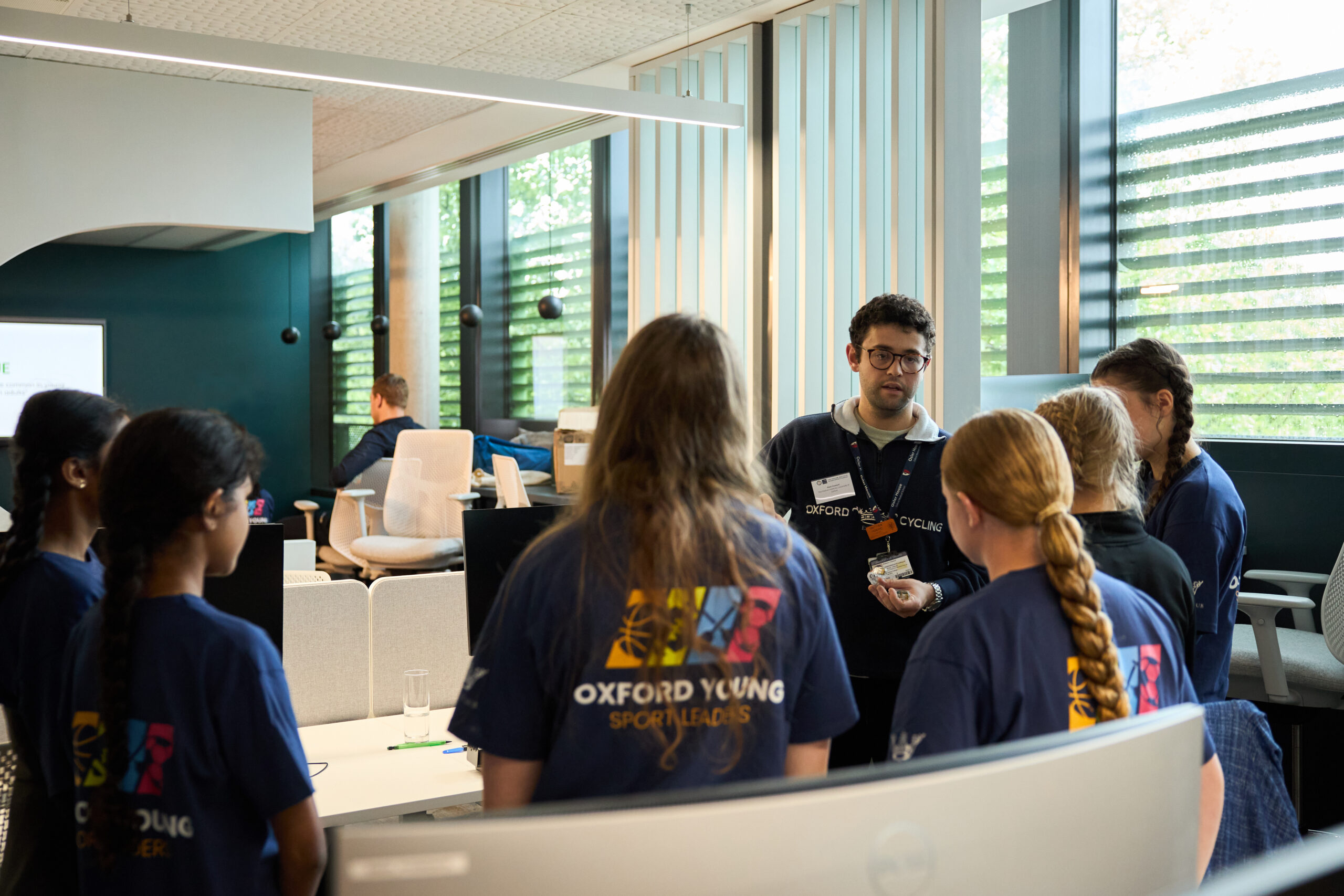
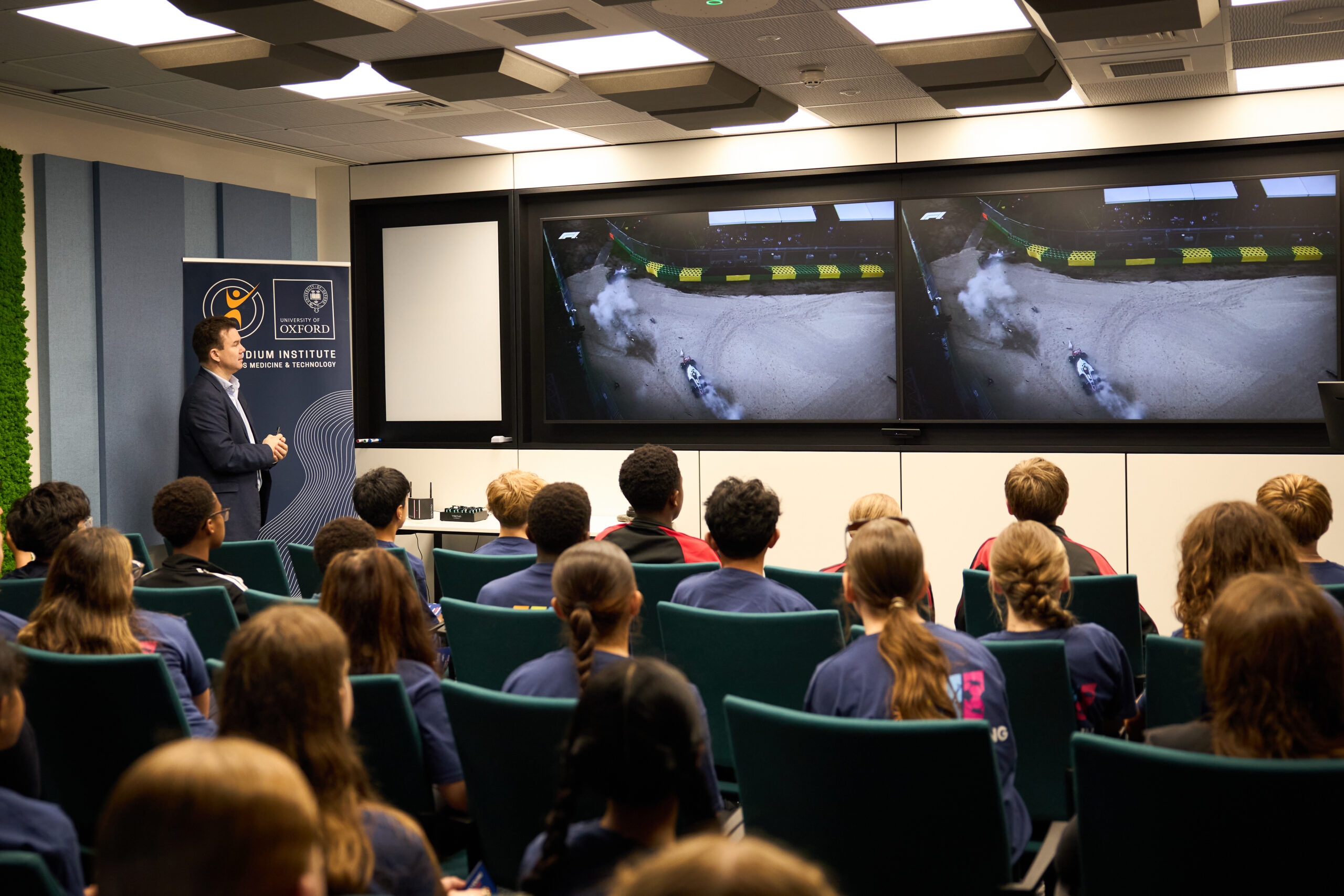
Throughout the day, students took part in a series of hands-on demonstrations led by researchers from across the Podium Institute. The sessions provided a glimpse into the innovative work taking place in sports medicine and technology, while encouraging students to think about the importance of research in improving athlete health and wellbeing.
Exploring Concussion Research
Izabelle Lövgren introduced students to the science of concussion, explaining how researchers investigate concussion using symptoms and MRI scans. Students tested their knowledge through interactive true-or-false activities, matched symptoms to their descriptions, and even had the opportunity to try on the TopSpin impact-monitoring helmet.
Understanding Muscle Function
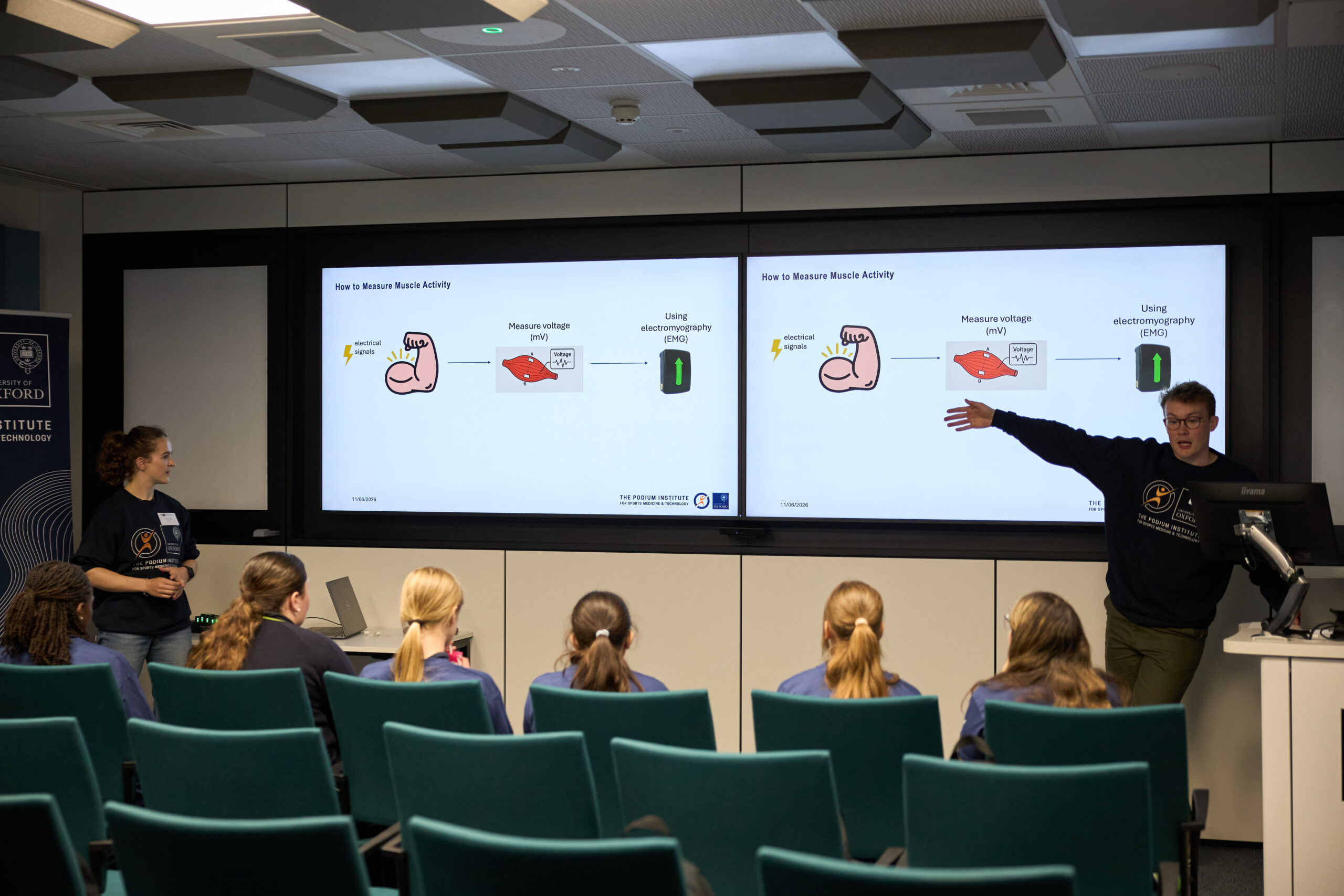
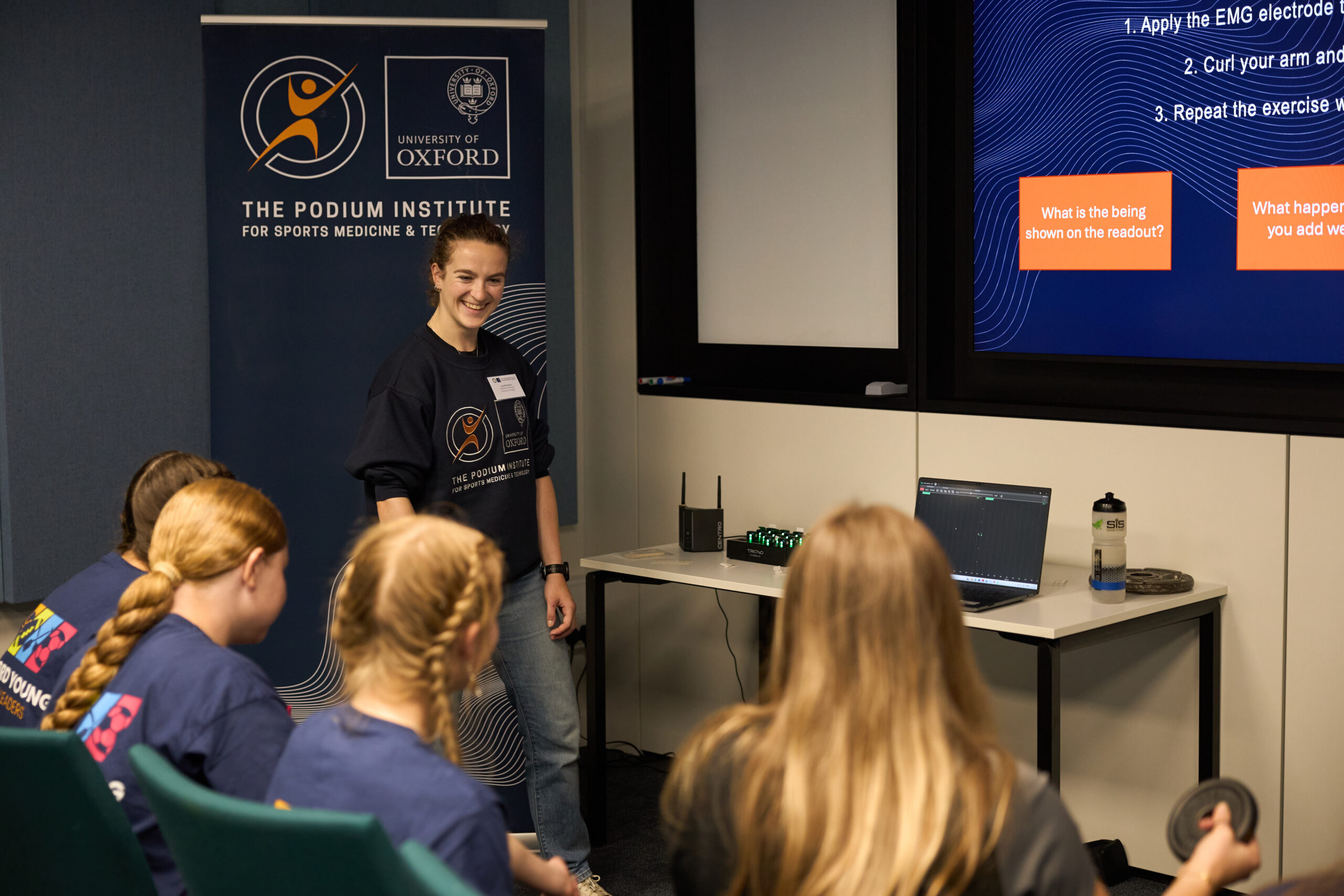
Harry Manship and Lucy Buchanan demonstrated how electromyography (EMG) can be used to measure the electrical activity of muscles during movement. Students learned how researchers use EMG data to understand muscle activation, investigate performance, and explore how poor technique or inappropriate training loads can increase the risk of injury.
Engineering Safer Helmets Through Origami
In a session led by Konstantin Dzavaryan, students discovered how the ancient art of origami is inspiring new approaches to impact protection. After learning how engineers use folding structures to absorb energy, students built and tested their own origami-inspired designs, exploring how these materials could help make sports helmets safer.
Technology meets concussion research
Matthew Howard showcased how emerging technologies, including brain imaging and portable monitoring devices, are helping researchers better detect, monitor, and understand the effects of concussion. Students had the opportunity to explore the different technologies and had fun learning more about the work we are doing towards improving athlete care.
Multi‑Material 3D Printing and Wearable Motion Tracking
As part of the day’s hands‑on demonstrations, Lukas Cha introduced students to his work on multi‑material 3D printing and robust wearable motion‑tracking systems. Through live demonstrations, students saw how flexible printed structures can be engineered to capture movement with precision. Lukas’ session gave students a clear sense of how engineering and sport science come together to create tools that help researchers better understand how the body moves.
Shaping Future Research
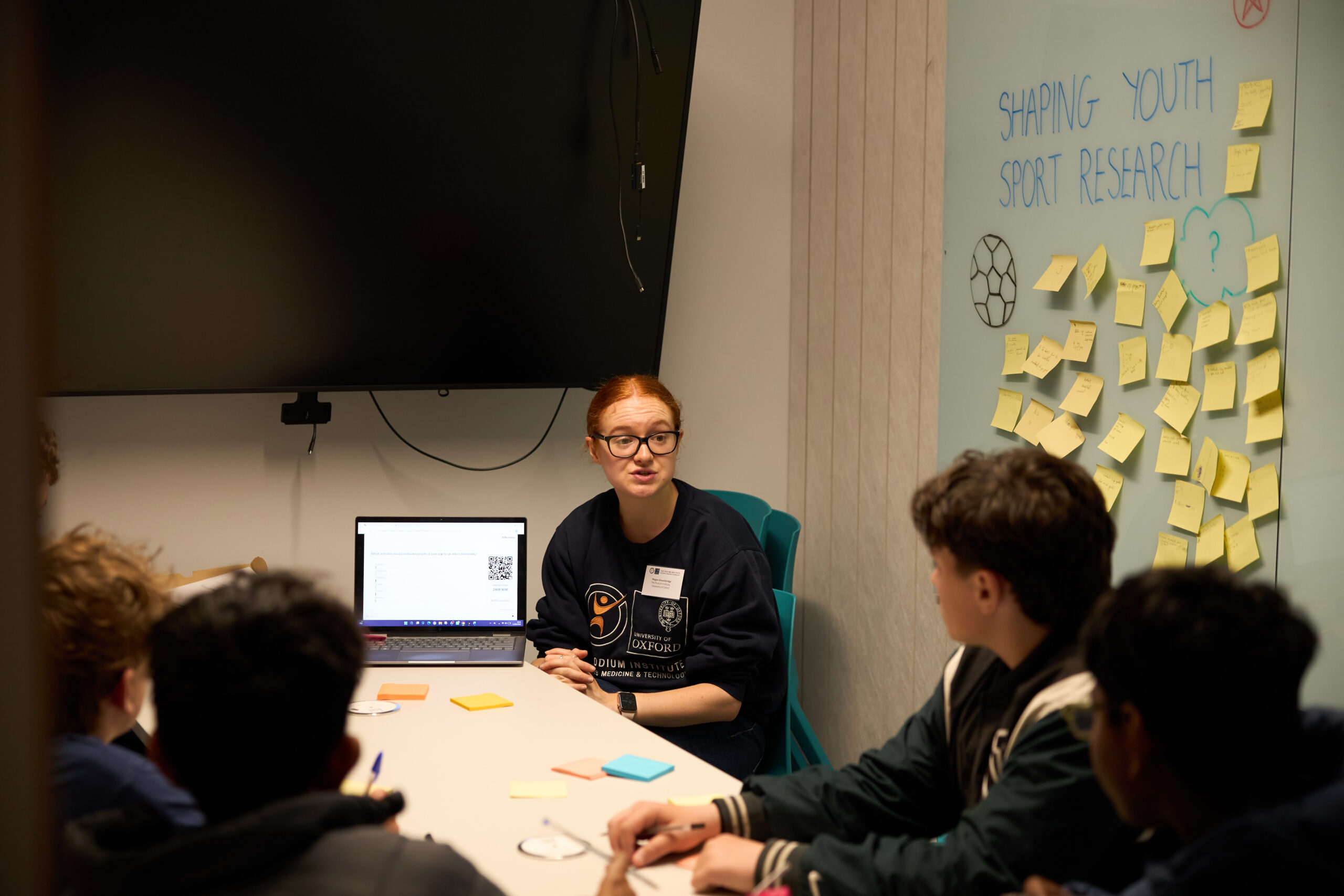
Led by Megan Groombridge, students participated in an interactive workshop designed to inform future youth sport research. Through group discussions, live polls, and quizzes, participants shared their views on topics including motivation, mental health, participation in sport, and injury prevention. Their insights will help shape future research priorities and ensure that young people’s voices are represented in studies that affect them.
Reflecting on the day, Zoe Pugh, Sport & Community Engagement Officer at the University of Oxford, said: “The children and teachers have all shared how much they enjoyed the session, and it was great to see everyone so engaged. The workshop really set a positive tone for the rest of the programme.”
Supporting the Oxford Neuroscience Experience
In July, the Podium Institute welcomed 12 Year 12 students participating in the Oxford Neuroscience Experience, a programme designed to give young people first-hand experience of neuroscience research and academic life.
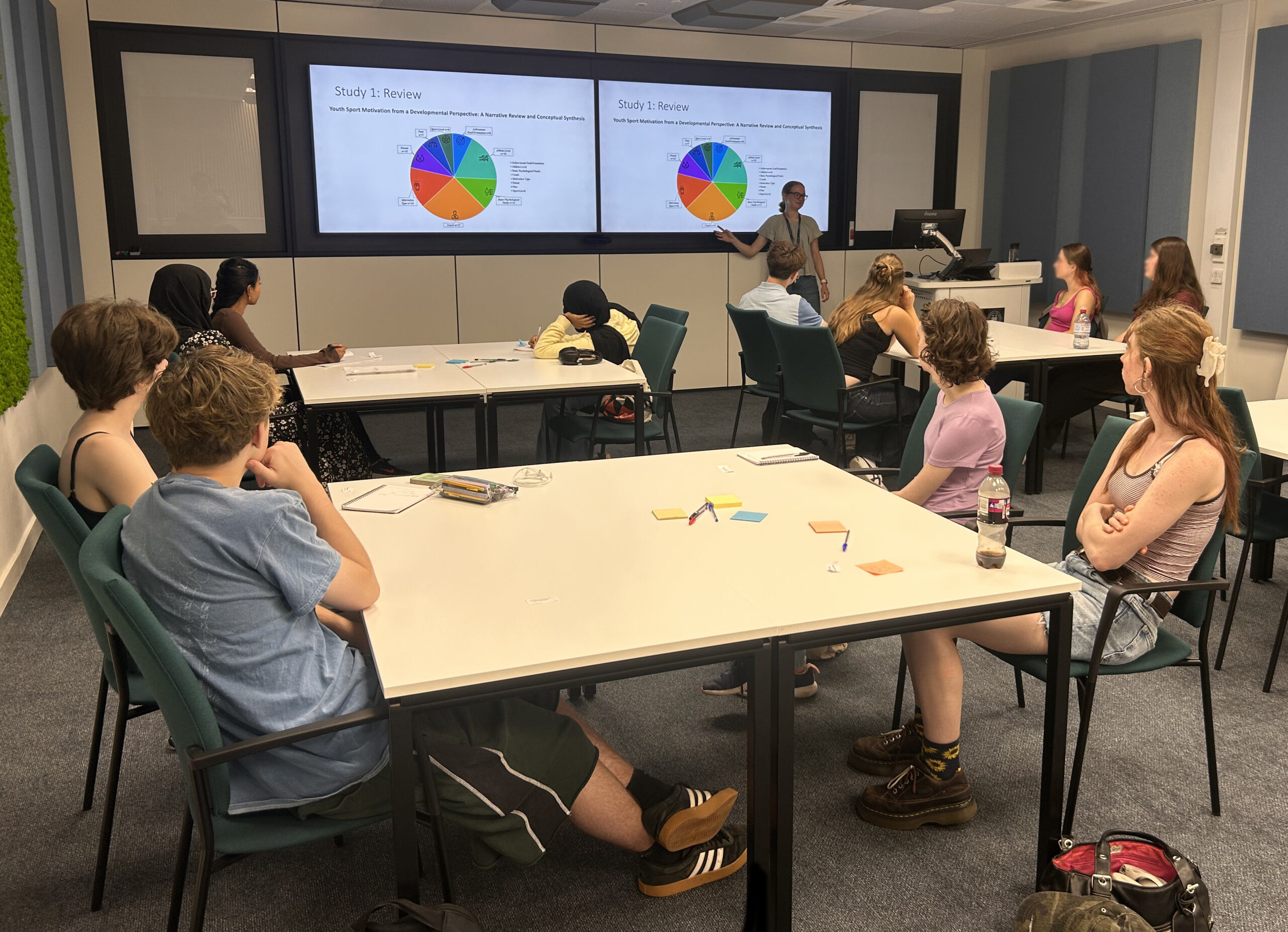
The session was led by Carinne Piekema, Podium Engagement Manager, and Megan Groombridge, who shared their experiences and career journeys before introducing students to the work of the Podium Institute. After a lively question-and-answer session, students took part in a series of mini focus groups centred around Megan’s doctoral research.
Working in small groups, students helped explore important questions relating to youth sport participation, including what motivates young people to take part in sport, what barriers they face, and how researchers can best engage with young participants. Using discussions and brainstorming activities, students contributed ideas that will directly inform future research design.
The session not only provided valuable public involvement for upcoming research and future applications but also gave students a unique opportunity to see how researchers involve communities in shaping studies from the very beginning.
The Oxford Neuroscience Experience aims to provide Year 12 students with authentic hands-on research experiences across a wide range of neuroscience disciplines. From designing and analysing experiments to learning about brain imaging, sleep research, and experimental medicine, participants gain insight into what research looks like in practice. The Podium session offered an opportunity to explore how sport, health, and neuroscience intersect, while demonstrating the importance of involving young people in research that concerns them.
“It was great to see how the NEP students engaged with the content of our session. Part of the session focused on the questions they’d like answered if they had access to Megan’s data. They came up with genuinely interesting questions that Megan is now planning to use in her study. The students loved being able to contribute directly to that research, and even asked to hear about the paper that might come out of Megan’s research!” – Carinne Piekema, Podium Engagement Manager
Looking Ahead
Engagement and public involvement remain a core part of the Podium Institute’s mission. Whether introducing younger students to the science behind sport and health or involving future generations in shaping research, these activities help build stronger connections between researchers and the communities they serve.
A huge thank you to all the Podium researchers, doctoral students, staff and students who contributed to making these sessions such a success. We look forward to welcoming more young people to the Institute in the future and continuing to inspire the next generation of scientists, researchers, and innovators.
Photos courtesy of OYSLP – Photographer Andrew Bailey